One engine, many instruments, getting better together

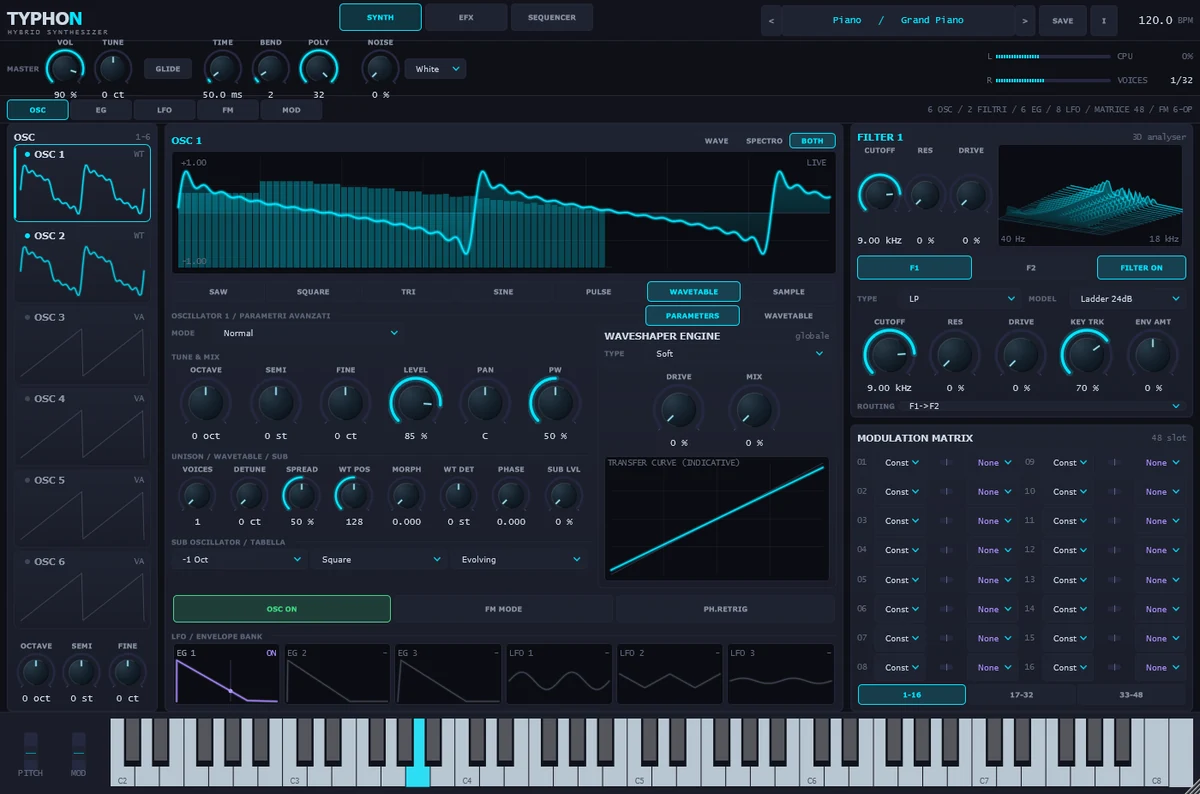
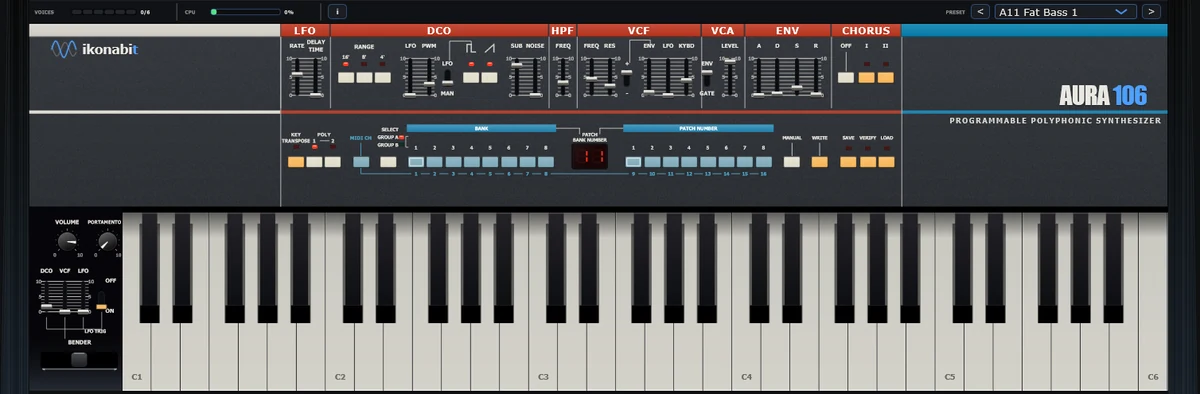
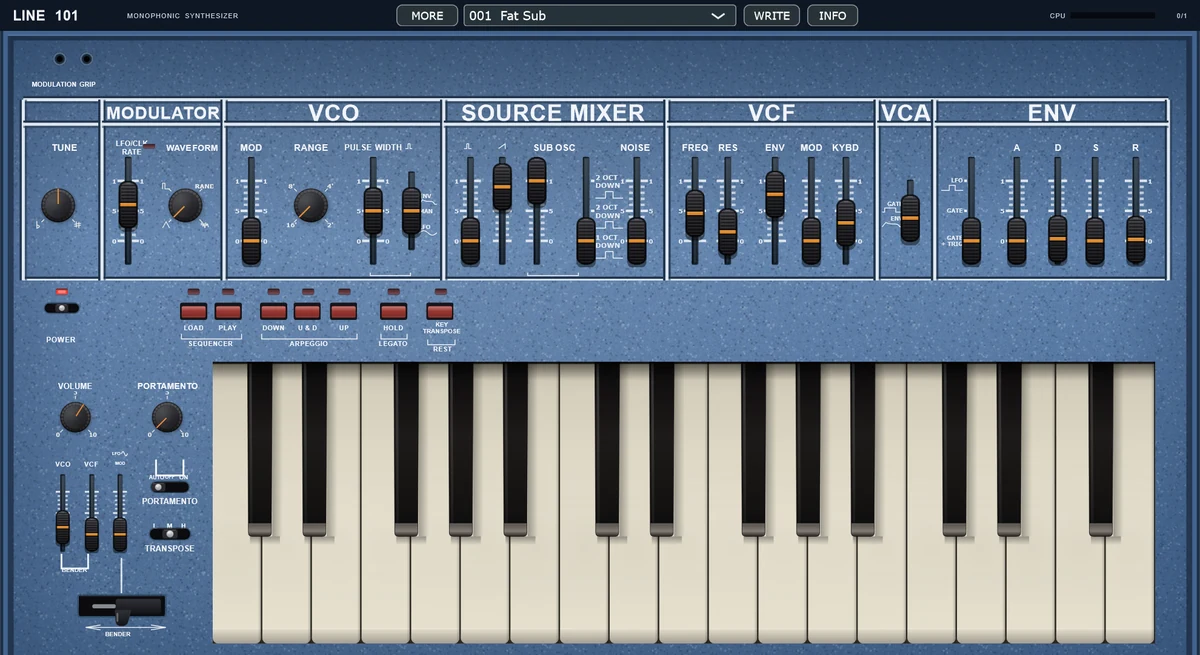
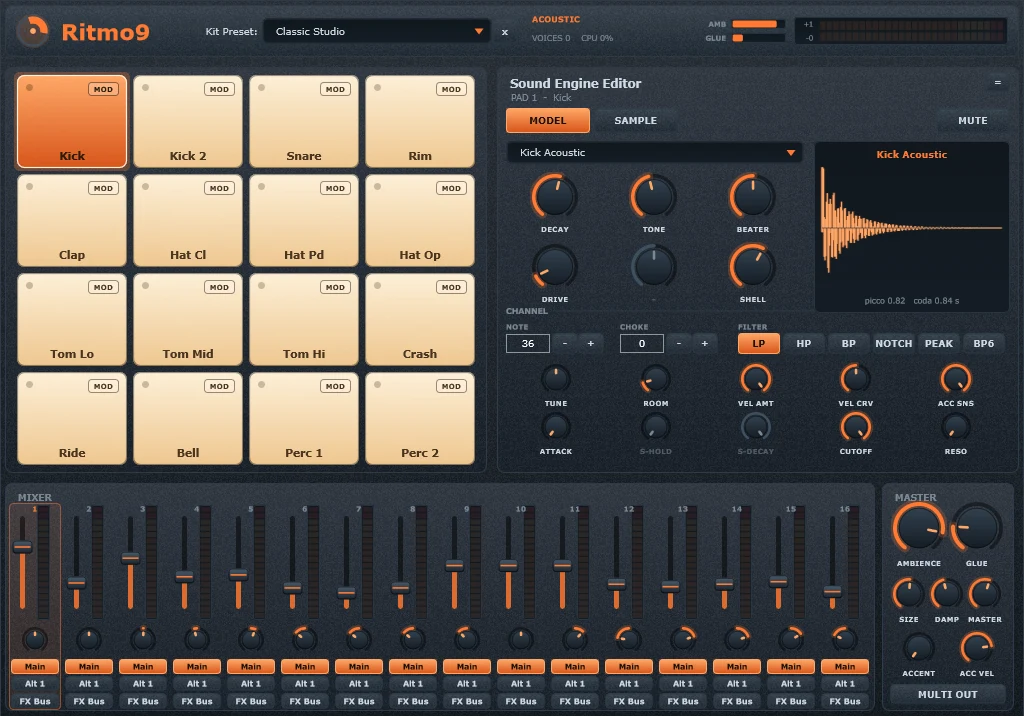
Most ikonabit synths run on the same audio engine: voices, oscillators, filters, envelopes and modulation are written once, and each instrument uses them in its own way. For anyone making music that is good news: when the engine gets better, every instrument built on it gets better together. We fix it once and it holds for all of them.
One fix, three gains. The filter drive holds up even when you push it hard: past a safe point the signal is kept in check, and below it nothing changes. Wavetable high notes get cleaner: in banks 0 to 23 the metallic grit known as aliasing is gone, while low notes stay exactly as they were. And the filter cutoff glides smoothly under automation, with no steps. Instruments that don’t use these parts, like the physical-model piano, stay as they were.
There is also more room to play. Before, the engine did the work for all six oscillators of every voice, even the switched-off ones; now it only does it for the ones that are on. On our development computer, with a single oscillator on, each voice costs about 23% less, and at half the processor load you go from about 45 to 64 voices. With all six oscillators on, as in the richest Typhon patches, the cost stays what it was: the more you leave off, the more you gain.
Finally, we keep an eye on how things sounded before. When we prepare an update, for the instruments that have saved references, the factory presets can be played through the real plugin and compared with how they sounded: volume, balance between lows and highs, brightness, attack. If a change is intended, like the cleaner high notes, we update the reference; if it isn’t, that is exactly what the comparison is there to catch before it reaches you.
The instrument
