How we keep your sound from changing

Most of our synths run on the same audio engine. If you make music, that is good news: improve it once and every instrument benefits. But there is a flip side. A bad tweak to the engine can change the sound of many instruments at once, and quietly. Nothing crashes. A patch you weren’t listening to at that moment just ends up a little duller than before.
So we compare the sound with itself. Every factory preset is played through the real plugin, measured, and held up against a reference copy kept in the project. If something shifts, the check turns red and we can catch it before it reaches you. Most instruments have one such check, and some Lite editions have their own, because their factory bank is different.
How sharp is the check?
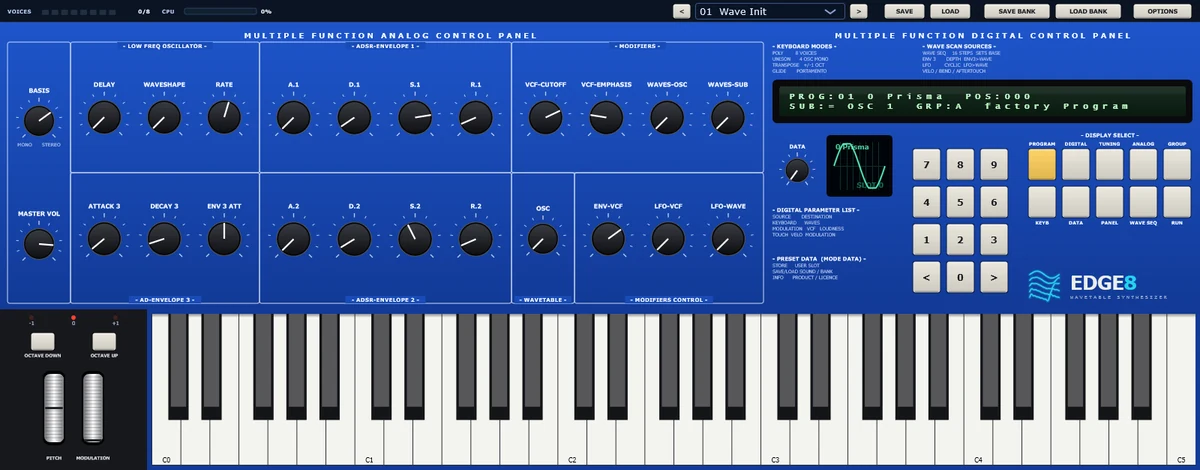
A check is only worth as much as the smallest problem it can see, and the only way to know is to put it to the test. On Edge8 we nudged the parameters on purpose by a tiny amount and counted how many factory presets set off the alarm. After we made the comparison stricter, it noticed many times more of them. On Edge8, the check now notices far more differences.
A check has to actually run
A check is only useful if it starts. When we launched all of the engine’s tests in one go, some showed up as “never run”: not red, not green, grey. Among them were things we care about: the six-operator FM core, the protection against the metallic grit on high wavetable notes, the guard that watches the processor load, and the test benches for our chip models. On the first real run almost all of them passed: the models were healthy.
A check that never starts does not fail. It goes quiet.
So we changed the mechanism. Whoever builds an instrument now builds the checks that measure it, too. The engine’s checks start from a list drawn automatically from the registered tests, so a new check joins by itself and is never born mute.
Who checks the checkers
A script now checks the tests themselves as well. Can this test really fail? Does it get built? Does it start by itself, or only by hand? And above all: does it actually check anything?
That last question found a good case on the Orfeo88 piano. Its test never pressed the sustain pedal, so it could not notice a change in the resonance between the strings. Now there are tests with the pedal down, too. For you, the point is simple: we want an update not to change your sound behind your back, and that is why we check the checks as well.